Internal vs. External Proxy IP Address: What’s the Difference?
20 July 2026
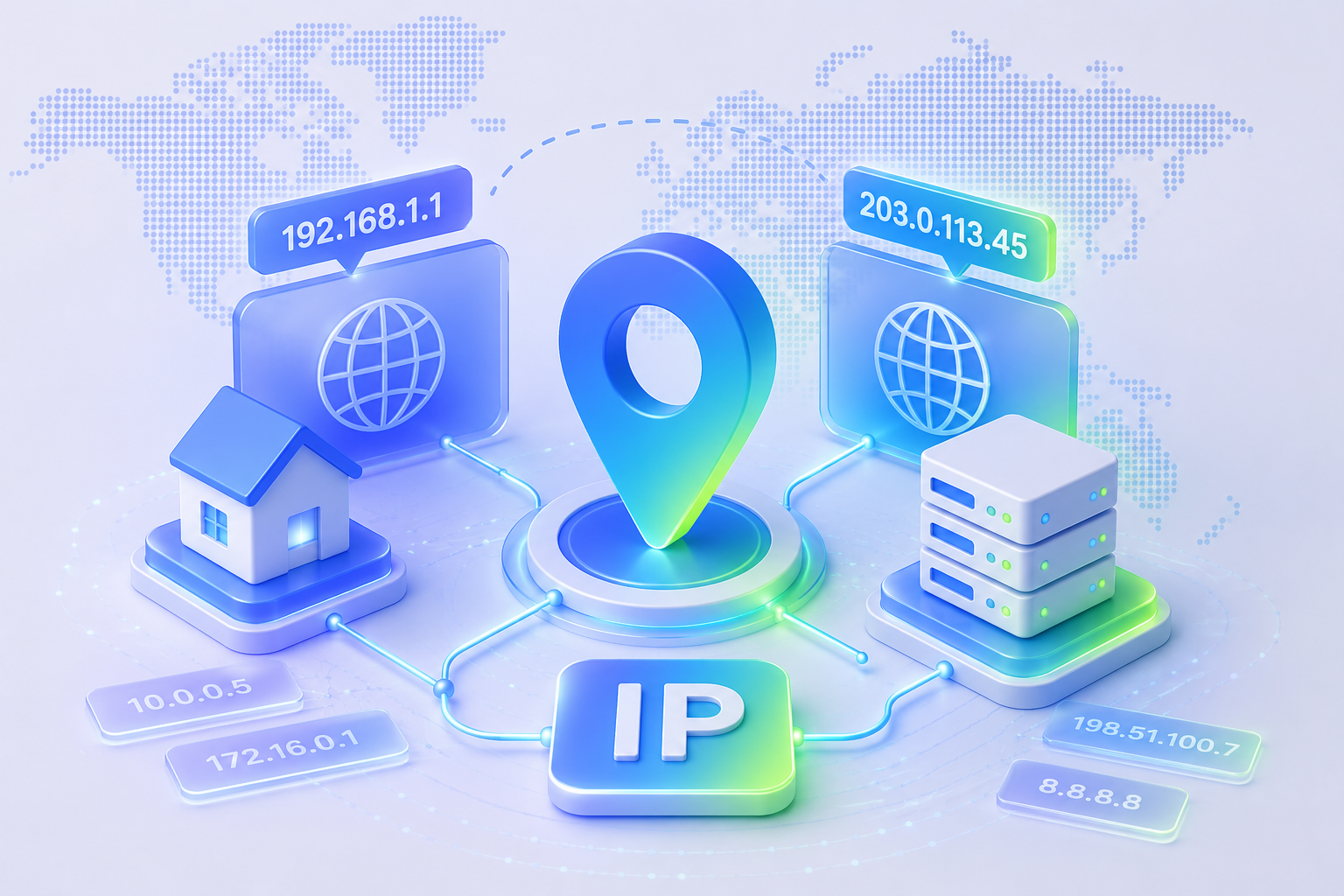
When working with proxies, users often see two IP addresses – an internal IP and an external IP. They serve different purposes, and understanding the difference will help you configure your connection more quickly and avoid common mistakes.
💡 Need help?
If you have any questions, contact Astro Support. We'll help you choose the right proxy type, configure your connection, select the optimal IP rotation mode, and answer any questions about using the service.
After signing up, you'll also receive $3 in account credit to test our proxies for free.
What Is an Internal Proxy IP Address?
An internal IP is the proxy server's address within the provider's infrastructure. This is the IP address you enter in your browser, antidetect browser, application, or other software when configuring the proxy connection.
This IP is used only to establish a connection to the proxy server and is typically not visible to the websites you visit.
Simply put, the internal IP is used to connect to the proxy.
What Is an External IP Address?
An external IP is the address that websites, services, and online platforms see after you connect through a proxy.
It determines:
- your virtual location;
- your country, city, and ISP (if available);
- which IP address websites see instead of your real one.
What's the Difference?
What You'll See in Your Astro Dashboard
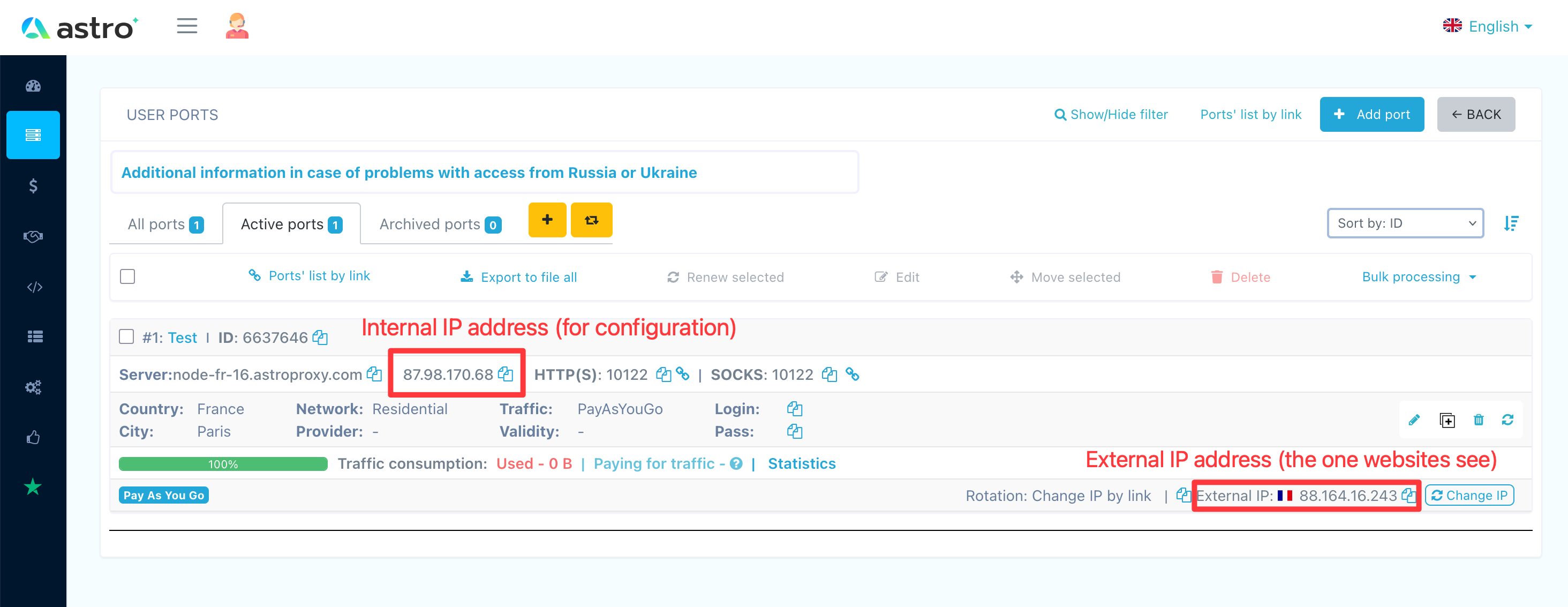
In the Astro dashboard, you can see both addresses:
- the internal IP – used to connect to the proxy;
- the external IP – the one websites see when your traffic goes through the proxy.
The screenshot below shows where each one is located and how they appear in the interface.
How IP Rotation Works in Astro
All Astro proxies are dynamic. This means you can use IP rotation and choose the IP rotation mode that best fits your specific use case.
Dynamic proxies help you:
- reduce the risk of blocks;
- distribute traffic across different IP addresses;
- automate work with accounts and services;
- improve the efficiency of scraping, data collection, and other tasks that require regular IP changes.
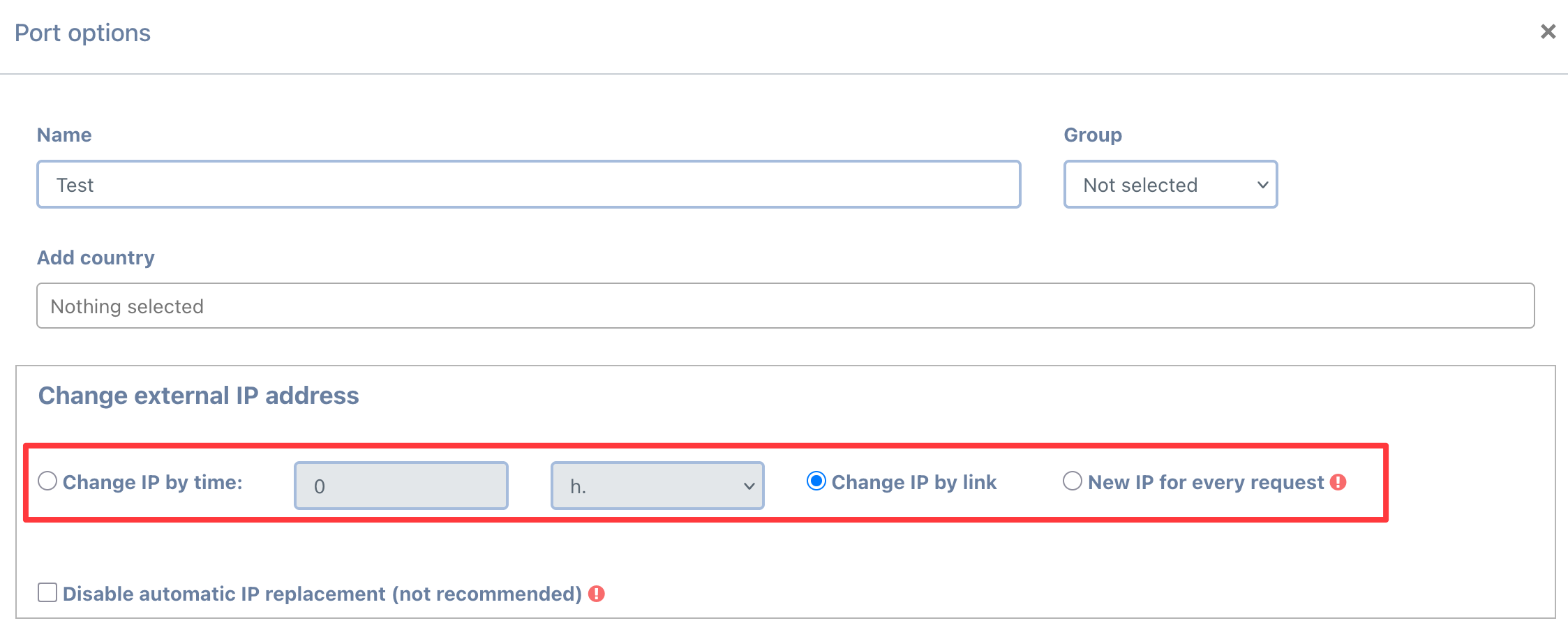
Astro offers three IP rotation modes:
For automation, API support is also available, allowing you to manage IP changes programmatically.
Important
When an IP rotation occurs, only the external IP address changes – the one visible to websites and online services. The internal IP address used to connect to the proxy remains the same, so there's no need to reconfigure your connection after the external IP changes. Simply continue using the proxy with the same connection settings.
With multiple rotation modes available, you can configure your proxies to match the requirements of any service, application, or workflow.
How to Change Your External IP Using the Rotation Link
To change your external IP address, use the IP rotation link available in your Astro dashboard (highlighted in the screenshot below).
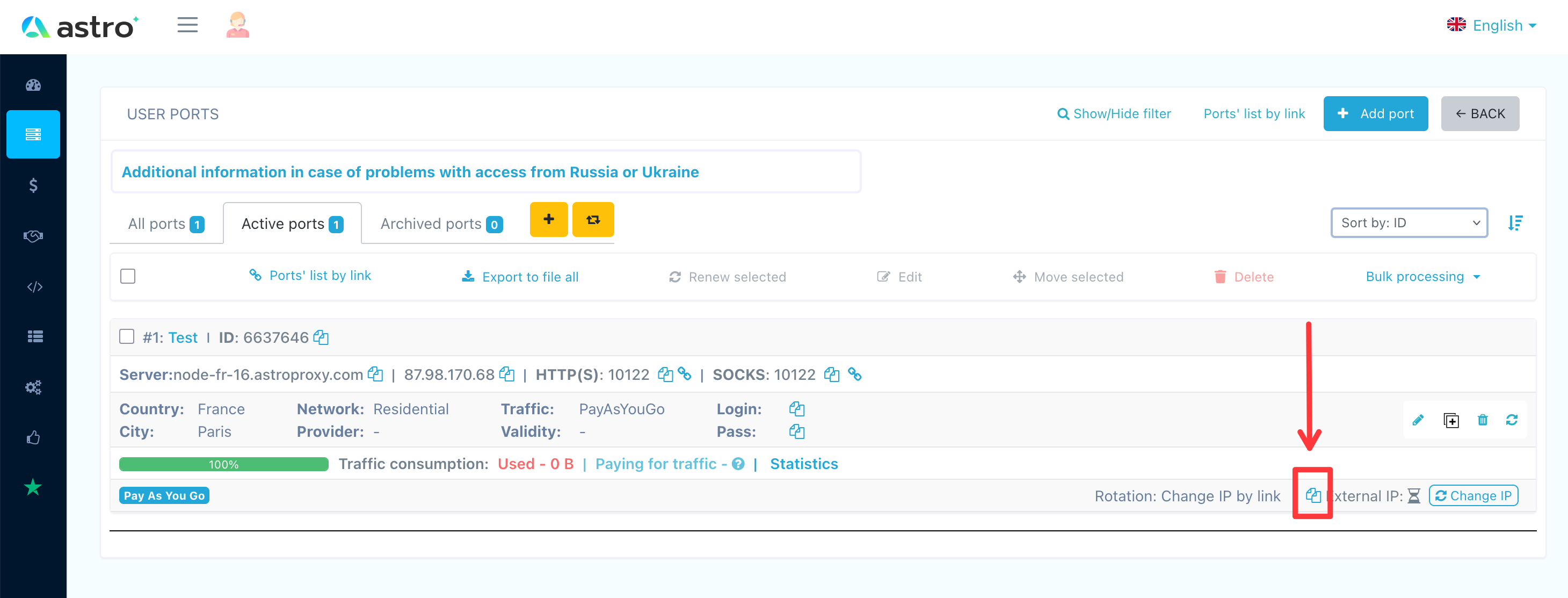
To do this:
- Copy the IP rotation link by clicking the icon highlighted in the screenshot.
- Open the link in any browser.
- Wait for the external IP address to change.
- Done. Your IP address has been changed.
Important: Open the link without the proxy connected. Once the IP has changed, no additional configuration is required – the new external IP will be used automatically, while your proxy connection settings will remain unchanged.
Summary
Internal and external IP addresses serve different purposes. The internal IP is used to connect to the proxy server, while the external IP is the address that websites and online services see.
It's also important to understand how IP rotation works. With Astro's dynamic proxies, you can choose the rotation mode that best suits your needs – timer-based, on every new connection, or manual – and tailor your network behavior to your specific use case.
Understanding these concepts will help you configure your proxies more quickly, avoid common mistakes, and get the most out of Astro.


Related questions
-
An internal IP is used to connect to the proxy server, while an external IP is the address websites and online services see.
-
Websites only see your external IP address. The internal IP is used solely for connecting to the proxy.
-
No. IP rotation changes only the external IP address. The internal IP remains the same.
-
No. Since the internal IP stays the same, your proxy settings do not need to be changed.
-
Astro supports three rotation modes: timer-based rotation, a new IP for each new connection, and manual IP rotation.
-
IP rotation helps distribute requests across different IP addresses, supports automation, and reduces the likelihood of blocks.