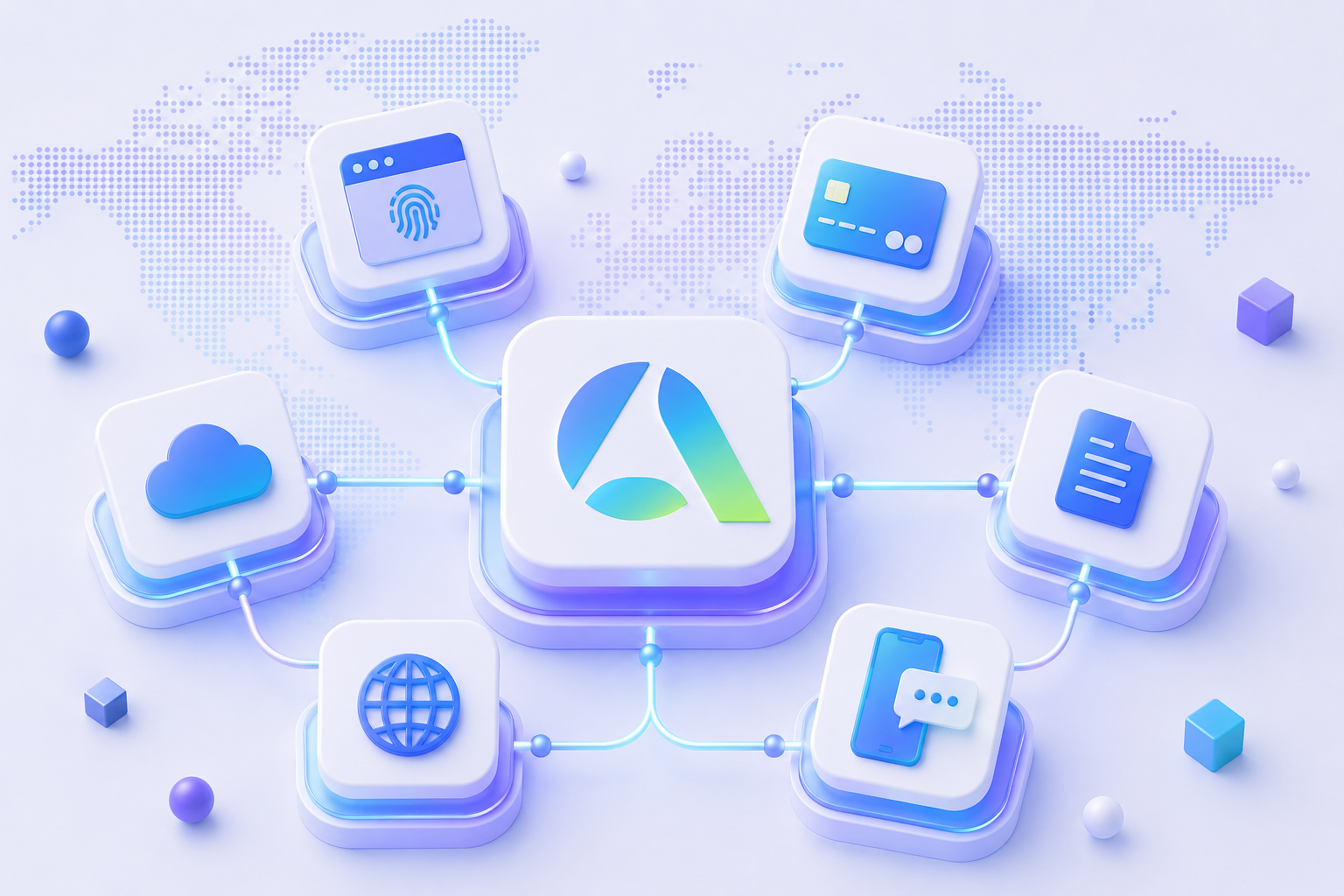
API Proxies for AI Agents: Why They Matter and How They Help Scale AI Applications
14 July 2026

Artificial intelligence is increasingly being used to automate tasks that rely on internet access. AI agents search for information, analyze websites, collect data, monitor prices, and interact with online services. As the number of requests grows, so does the risk of running into IP-based restrictions.
AI agents can work around the clock, handle thousands of tasks simultaneously, and never complain about overtime. But they still face one major challenge: if every request comes from the same IP address, websites are likely to slow them down, rate-limit them, or block access altogether. API proxies solve this problem by distributing requests across multiple IP addresses, helping AI agents operate reliably even under heavy workloads.
That’s why more developers are adopting API proxies. They make it possible to automate IP management, distribute traffic efficiently, and scale AI applications without manual configuration.
💡 Try Astro proxies for free
Want to test our API proxies before committing? Sign up for Astro and get $3 in free test credit. You can create a proxy, integrate it with your application or AI agent, test the API, evaluate connection speed and reliability, and make sure it meets your needs before purchasing a full plan.
What Are API Proxies?
An API proxy provides a programmatic way to manage proxy servers. Instead of configuring proxies manually, developers can use an API to obtain new IP addresses, rotate them on demand, and select the desired geolocation directly from their applications.
This approach is particularly valuable for systems running dozens, hundreds, or even thousands of AI agents simultaneously.
Why AI Agents Need API Proxies
Modern AI agents perform a wide range of internet-based tasks, including:
- Searching the web
- Collecting publicly available data
- Monitoring product prices
- Analyzing search engine results
- Conducting competitor research
- Checking product availability
- Automating business workflows
- Interacting with third-party web services
When a large number of requests originate from the same IP address, websites may throttle traffic, temporarily block access, or trigger additional verification mechanisms. API proxies distribute requests across multiple IP addresses, helping maintain reliable and uninterrupted connectivity.
Key Benefits of API Proxies
Automatic IP Rotation
IP addresses can be rotated on a schedule, with every new connection, or programmatically through an API without interrupting running applications.
Scalability for AI Agents
API-based proxy management makes it easy to support hundreds or thousands of AI agents from a single infrastructure.
Flexible Geolocation
Developers can choose the country, city, or internet service provider for individual requests, making it possible to test localized content and access region-specific data.
Full Automation
Everything is managed programmatically, eliminating manual proxy configuration and simplifying infrastructure management.
Common Use Cases
| Use Case | How API Proxies Are Used |
|---|---|
| 🤖 AI Agents | Performing internet-based tasks efficiently and reliably |
| 📊 Data Collection | Gathering publicly available information from websites |
| 💰 Price Monitoring | Tracking product prices across different regions |
| 🔎 Search Engine Analysis | Checking search results across countries and locations |
| 📈 Market Research | Analyzing competitors and market trends |
| ⚙️ Automation | Running large-scale automated workflows |
| 🌐 Online Services | Integrating with websites and third-party platforms |
What to Look for in an API Proxy Provider
When choosing an API proxy service, consider the following:
- A robust and well-documented API
- Automatic IP rotation
- A large pool of IP addresses
- Country, city, and ISP targeting
- High connection speeds
- Reliable uptime
- Comprehensive documentation
- Infrastructure built for scalability
API Proxies in Astro
Astro provides a fully featured API for managing proxies without manual configuration.
The platform offers:
- 50 million IP addresses
- Coverage across 150 countries
- 99.9% uptime
- Dynamic residential, mobile, and datacenter proxies
- IP rotation by timer (starting from one minute), on every new connection, manually, or via API
- Country, city, and ISP targeting
- Up to 10 countries on a single port
- Random country selection with the option to exclude up to 10 countries
- Ethically sourced IP addresses collected with verified user consent and compliant with KYC and AML standards
With Astro’s API, developers can integrate proxy management directly into AI applications, automate IP rotation, and ensure reliable connectivity for large-scale AI agent deployments.
Conclusion
As AI agents become more capable, the infrastructure supporting them becomes increasingly important. API proxies help automate IP management, improve reliability, reduce the risk of rate limits and blocks, and make AI applications easier to scale.
Whether you’re building AI agents, automating web-based workflows, or collecting data at scale, API proxies are a critical component of a reliable and scalable AI infrastructure.


Related questions
-
API proxies provide a programmatic way to manage proxy servers, rotate IP addresses, and configure proxy settings without manual setup.
-
API proxies help AI agents handle large volumes of internet requests, automate IP rotation, reduce the risk of rate limits, and maintain reliable connectivity.
-
API proxies are commonly used for data collection, website analysis, price monitoring, search engine analysis, workflow automation, AI agents, and other internet-based applications.
-
By managing IP addresses through an API, developers can deploy hundreds or thousands of AI agents without manually configuring each connection.
-
Yes. Most proxy providers support automatic IP rotation via API, scheduled rotation, rotation on every new connection, or manual IP changes.
-
The right choice depends on the use case. Residential, mobile, and datacenter proxies are commonly used for AI applications, depending on performance and connectivity requirements.
-
Consider the size of the IP pool, geographic coverage, automatic IP rotation, connection reliability, performance, scalability, and API documentation.
-
Yes. API proxies are designed for scalable infrastructure and make it easy to manage network connectivity for large numbers of AI agents and high-volume internet traffic.