How to Choose a Proxy Rotation Mode: A Complete Guide
05 August 2026

Proxy rotation (IP rotation) is the process of changing an IP address when using dynamic proxies. Choosing the right rotation mode helps you create the optimal setup for working with accounts, automation, web scraping, and other tasks.
After exploring the benefits of dynamic proxies, it is time to choose the right rotation mode. In this guide, we will cover all Astro rotation modes, their features, and recommendations for choosing the best option.
🎁 Test Astro rotation modes for free
Not sure which rotation mode is right for your needs?
Sign up for Astro and get $3 in test balance. This is enough to create a proxy, test all rotation modes, and choose the option that works best for you.
Astro Rotation Modes
Astro offers three IP rotation modes:
- IP rotation by time (timer-based)
- IP rotation by link
- New IP for every new connection
The rotation mode is selected when creating a port, but it can be changed at any time while the port remains active. This allows you to easily adapt the rotation scenario to your current needs without creating a new port.
Each mode is designed for different use cases, so the right choice depends on your goals. Let’s take a closer look at each mode.
For deeper automation, Astro provides an API for IP rotation. It allows you to programmatically control IP rotation and integrate IP changes into your own services, AI agents, applications, anti-detect browsers, and other tools.
IP rotation by time (timer-based)
In this mode, Astro automatically changes the IP address at a selected time interval (from 30 seconds).
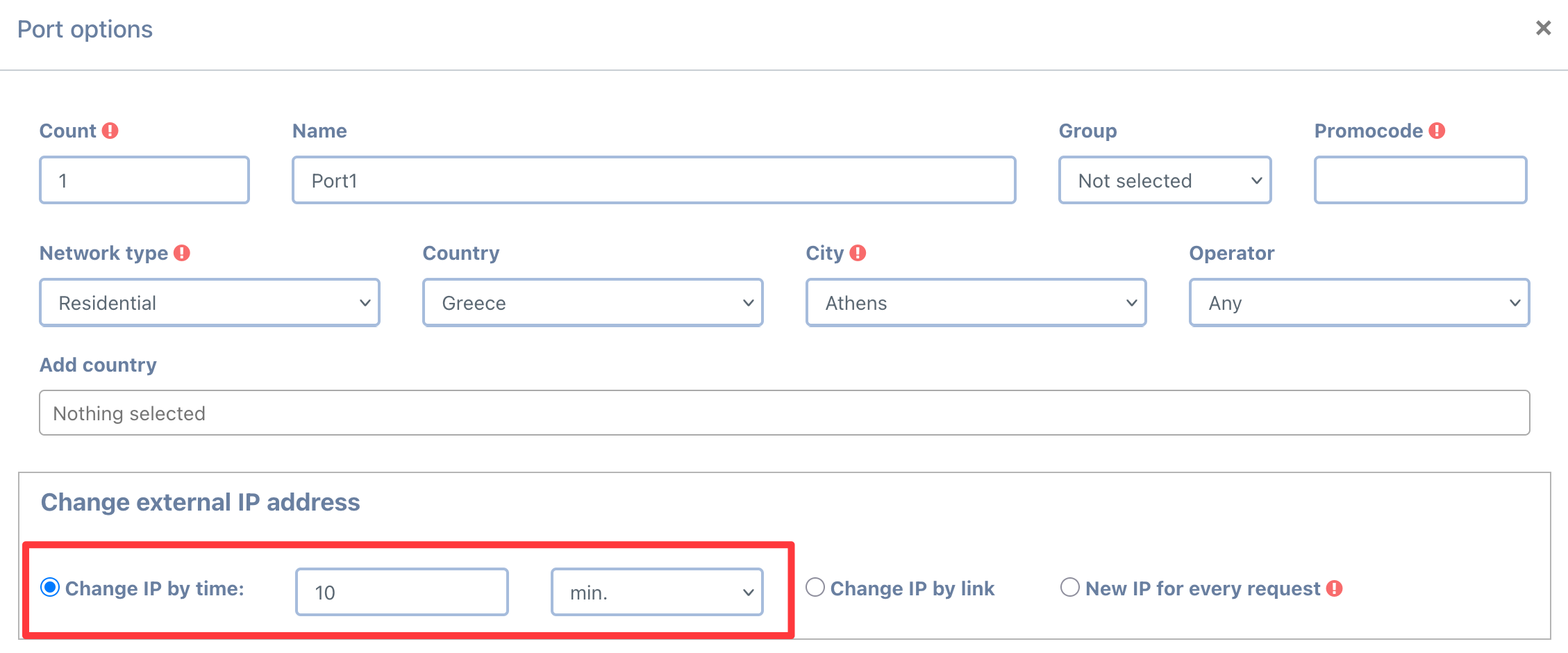
Best suited for:
- website parsing;
- web resource monitoring;
- automation;
- data collection;
- web scraping.
New IP for Every New Connection
In this mode, Astro initiates an IP change every time a new connection is established.
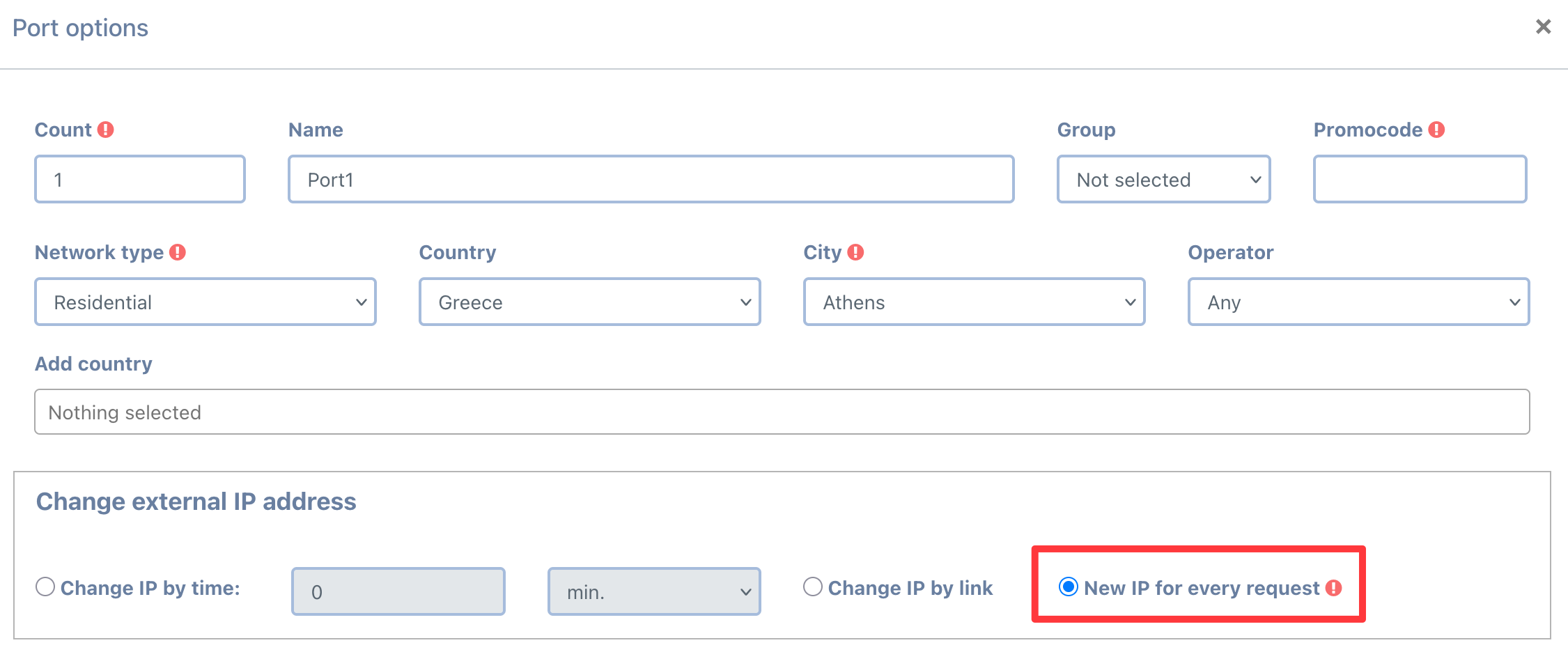
Best suited for:
- mass account registrations;
- automated checks;
- large-scale repetitive actions;
- scenarios where an IP change is required for every new connection.
IP Rotation by Link
In this mode, the user manually initiates an IP change whenever needed.
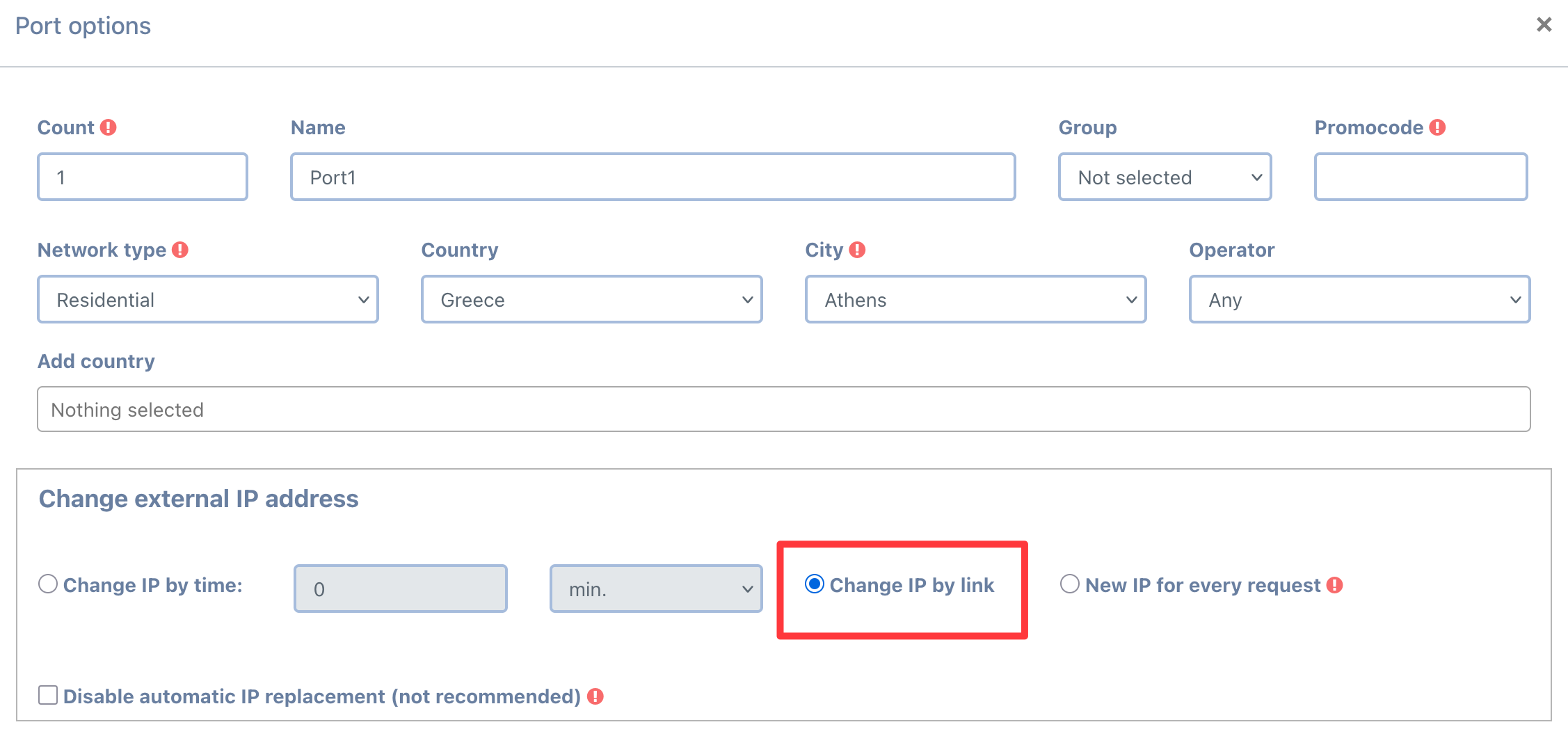
Best suited for:
- account management;
- anti-detect browsers;
- traffic arbitrage;
- tasks where you need to control exactly when the IP address changes.
The IP change link can be integrated into any software that supports sending HTTP requests. For example, an anti-detect browser, custom application, or script can automatically change IP addresses according to a predefined scenario.
How to Change Your External IP Address Using a Link?
To change your external IP address, use the IP change link available in your Astro dashboard (it is highlighted in the screenshot below).
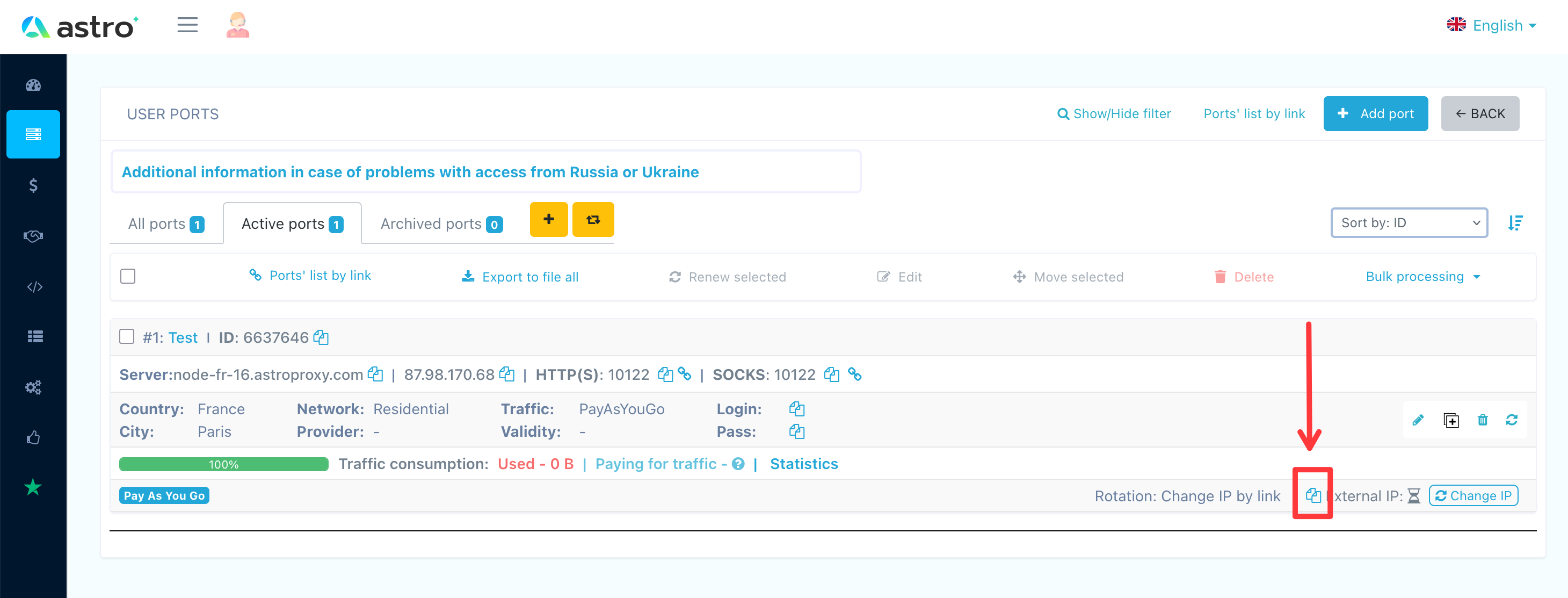
To do this:
- Copy the IP change link – click once on the icon highlighted in the screenshot.
- Open the link in any browser.
- Wait until the external IP address changes.
- Done. The IP address has been changed.
Important: open the link without an active proxy connection. After changing the IP, no additional configuration is required – the new external IP will be used automatically, while your proxy connection settings will remain unchanged.
Comparison of Astro Dynamic Proxy Rotation Modes
Before choosing a mode, let’s compare all Astro rotation modes in one table.
How to Choose an IP Rotation Mode
Not sure which mode is right for you? Follow the flowchart below and answer the questions step by step. At the end, you will receive a recommendation for choosing an Astro rotation mode.
🤔 When should the IP change?
Disabling Automatic IP Replacement
By default, Astro automatically selects a new IP address if the current one becomes unavailable. At the same time, the parameters selected when creating the port, such as country, city, and internet provider, remain unchanged.
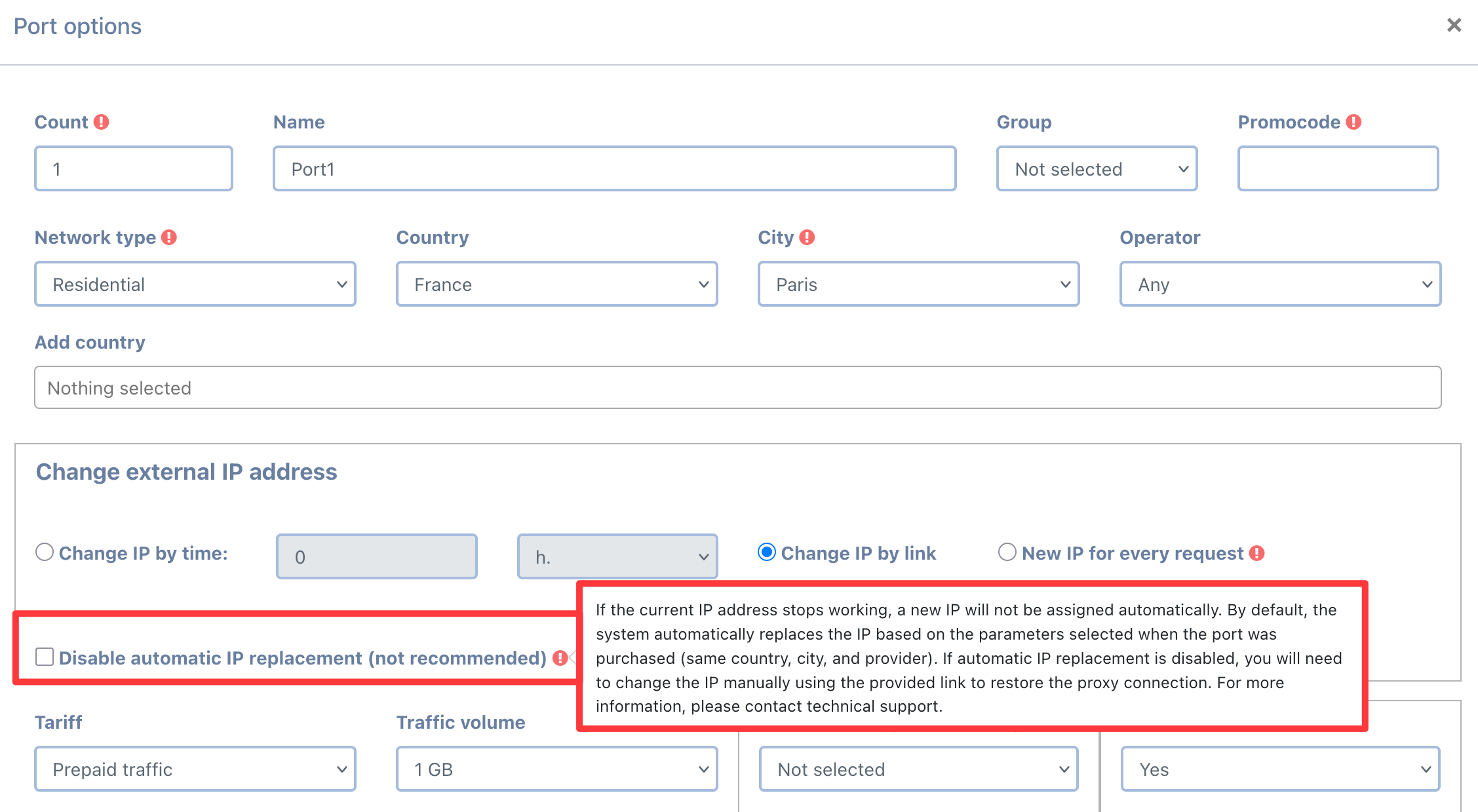
If you enable the option “Disable automatic IP replacement”, automatic assignment of a new IP address will be disabled. In this case, if the current IP stops working, you will need to manually initiate an IP change using the link to continue working.
⚠️ Important
The “Disable automatic IP replacement” option is intended only for a very limited range of use cases.
Do not enable this option unless our technical support team has specifically recommended it or you clearly understand why you need it.
If you enable this option, Astro will stop automatically replacing unavailable IP addresses. If the current IP becomes unavailable, the proxy will stop working and all connections through it will be interrupted. Service can only be restored after manually changing the IP using the link.
This feature is intended only for scenarios where automatic IP replacement is not allowed.
If you have enabled this feature and the proxy port has stopped working, manually initiate an IP change using the link. Once a new IP address is assigned, the port will become available again.
⚙️ Need Help?
Astro engineers will help you choose the right rotation mode for your tasks and suggest optimal proxy settings for your specific use case.
Why Users Choose Astro
Astro provides flexible tools for working with dynamic proxies and allows you to choose the rotation mode that best fits your needs.
Conclusion
The right proxy rotation mode always depends on your specific task. For account management, it is more convenient to manually initiate IP changes. For long-term parsing and automation, timer-based rotation is commonly used. If you need an IP change for every new connection, choose the “New IP for Every New Connection” mode.
Astro supports all three rotation modes, allowing you to choose the best option for any dynamic proxy workflow and quickly switch to another mode whenever needed.


Related questions
-
Proxy rotation is the process of automatically or manually changing an IP address when using dynamic proxies. It helps distribute requests across different IPs for account management, web scraping, automation, and other use cases.
-
If you need full control over when the IP address changes, IP rotation by link is the best option. It allows you to rotate the IP exactly when needed.
-
Timer-based rotation is suitable for web scraping, data collection, website monitoring, automation, and other tasks where IP addresses need to change at fixed time intervals.
-
This mode assigns a new IP address for every new connection. It is useful for large-scale account creation, automated verification, and workflows that require frequent IP changes.
-
Yes. Astro provides a dedicated IP rotation link that can be used manually or integrated into software capable of sending HTTP requests.
-
Yes. Astro supports automated IP rotation through its API. The IP rotation link can also be integrated into applications, scripts, antidetect browsers, and other software.
-
IP rotation by time changes the IP automatically after a selected interval. IP rotation by link allows you or your software to trigger the IP change whenever required.
-
By default, Astro automatically replaces an unavailable IP address. If automatic replacement is disabled, the proxy will resume working only after a manual IP change.
-
Yes. Astro provides a full-featured API for proxy management, IP rotation, and workflow automation.
-
Astro offers three IP rotation modes, a network of 50 million dynamic IPs across 150 countries, API access, OpenVPN Connect support, flexible pricing, and live technical support from experienced engineers.